Author: AlexSmith

Islamic Forex Accounts in Dubai: Halal Trading GuideIslamic Forex Accounts in Dubai: Halal Trading Guide

Forex trading has become increasingly popular in Dubai due to its dynamic financial markets and the city’s status as a global investment hub. For Muslim traders, however, there is a key consideration: ensuring that trading practices comply with Islamic principles, specifically avoiding interest-based transactions that are prohibited under Sharia law.

Islamic forex accounts, also known as swap-free accounts, provide a solution by allowing Muslim traders to participate in forex markets without violating religious guidelines. This guide explains how these accounts work, their benefits, and what beginners should know before opening one in Dubai.

Understanding Islamic Finance Principles

Islamic finance operates under Sharia law, which has specific rules governing financial transactions. Key principles relevant to forex trading include:

  • Prohibition of Riba (Interest): Charging or paying interest is forbidden. Traditional forex accounts often involve overnight swap charges, which are considered interest.
     
  • Avoidance of Excessive Risk and Speculation: Sharia law encourages responsible investment and discourages highly speculative practices.
     
  • Transparency and Fairness: All transactions must be clear, fair, and free of hidden costs or deceit.
     

Islamic forex accounts are designed to comply with these rules while still allowing traders to participate in currency markets.

What Is an Islamic Forex Account?

An Islamic forex account is a trading account that removes interest charges associated with holding positions overnight. These accounts are sometimes referred to as “swap-free” accounts.

How they work:

  • Traditional accounts charge or pay swaps for positions held overnight.
     
  • In Islamic accounts, these charges are removed, replaced with alternative fees that comply with Sharia law.
     
  • Traders can hold positions for as long as needed without incurring interest-related costs.
     

Islamic accounts are available from both local brokers in Dubai and international brokers that serve the UAE.

Who Can Open an Islamic Forex Account?

Islamic accounts are primarily intended for Muslim traders seeking Sharia-compliant trading. However, most brokers allow any client to open a swap-free account, provided they request it during registration.

Typical requirements include:

  • Completion of standard account registration
     
  • Identification verification (passport, Emirates ID, proof of address)
     
  • Request for a swap-free or Islamic account type
     

Many low spread brokers offer the option directly when opening an account online or via customer support.

Advantages of Islamic Forex Accounts

Islamic forex accounts provide several benefits:

Compliance with Religious Beliefs

The main advantage is ensuring that trading does not violate religious principles, allowing Muslim traders to participate without ethical concerns.

Long-Term Position Flexibility

Since there are no overnight interest charges, traders can hold positions for longer periods without incurring additional costs, which is useful for swing or position trading.

Reduced Complexity

Swap-free accounts remove the need to calculate interest-related charges, simplifying trade cost management for beginners.

Access to Mainstream Trading Platforms

Islamic accounts are supported on popular platforms like MetaTrader 5 and MetaTrader 4, allowing access to advanced charting, technical indicators, and risk management tools.

Potential Considerations

While Islamic accounts are beneficial, traders should be aware of certain points:

  • Alternative Fees: Some brokers charge administrative fees to compensate for removing swaps. These fees are typically small but should be considered in your trading costs.
     
  • Limited Promotions: Certain bonuses or promotions may not apply to swap-free accounts.
     
  • Broker Variations: Not all brokers handle Islamic accounts the same way, so it’s important to check terms and conditions carefully.
     

Steps to Open an Islamic Forex Account in Dubai

Opening an Islamic forex account is similar to a standard account, with some additional steps.

Step 1: Choose a Regulated Broker

Select a broker licensed by the Dubai Financial Services Authority or a reputable international broker that serves UAE residents.

Step 2: Register Your Account

Complete the online application with personal information, residency status, and account preferences.

Step 3: Request Islamic Account Type

During registration or via customer support, specify that you require a swap-free account.

Step 4: Complete KYC Verification

Submit identification documents, such as:

  • Passport
     
  • Emirates ID or residence visa
     
  • Proof of address
     

This ensures compliance with anti-money laundering regulations.

Step 5: Fund Your Account

Deposit funds using supported payment methods, including bank transfers or credit/debit cards. Make sure the deposit method complies with your broker’s terms for Islamic accounts.

Step 6: Start Trading

Use the best forex trading platform for beginners to place orders, manage positions, and implement risk management strategies. Ensure that your trading style aligns with Sharia-compliant principles.

Tips for Beginners Using Islamic Accounts

  • Start with a demo account to learn platform functionality
     
  • Understand all fees and cost structures
     
  • Use stop-loss and take-profit orders to manage risk
     
  • Avoid excessive leverage, which increases risk even in swap-free accounts
     
  • Keep detailed records of trades to monitor performance
     

Choosing the Right Broker in Dubai

When selecting a broker for an Islamic account, beginners should consider:

  • Regulation and licensing
     
  • Transparency of fees
     
  • Platform usability
     
  • Customer support responsiveness
     
  • Availability of educational resources
     

Reliable brokers make the account opening process straightforward and provide clear terms for swap-free trading.

Final Thoughts

Islamic forex accounts provide a Sharia-compliant way for Muslim traders to participate in Dubai’s forex markets. By removing interest charges and offering alternative fee structures, these accounts allow traders to adhere to their religious beliefs while accessing mainstream trading platforms.

For beginners, it is important to choose a regulated broker, understand the fee structure, and practice responsible trading. Swap-free accounts remove one potential ethical concern, but success still depends on education, discipline, and risk management.

With the right approach, Islamic forex accounts enable traders to participate in Dubai’s financial markets confidently and responsibly.
From Platform to Paycheck: How Smart Futures Traders Choose Their Tools and Build Toward Professional FundingFrom Platform to Paycheck: How Smart Futures Traders Choose Their Tools and Build Toward Professional Funding

In today’s markets, a trader with a laptop and a solid connection can access the same futures exchanges that banks and hedge funds use. But access alone doesn’t create consistency; the tools you use and the process you follow are what separate hobbyists from professionals. Choosing the Best Futures Trading Platform for your style, risk profile, and growth ambitions is one of the highest‑leverage decisions you’ll make—and it’s exactly the kind of decision FundingTicks is built to support with education, technology, and a clear path toward funded trading.


Why Your Futures Platform Choice Matters More Than You Think

Many traders treat platforms as interchangeable. They compare commissions, pick the cheapest option, and dive into live markets. Months later, they realize:

  • Their risk tools are limited or awkward.
  • Their charts don’t match their decision‑making style.
  • Their platform struggles during high‑volatility events.
  • They can’t easily pull the data needed to evaluate performance.

At that point, changing platforms feels like a hassle, so they stay stuck.

Your platform is more than a place to click Buy and Sell. It’s the environment where you:

  • Analyze markets and structure ideas.
  • Translate those ideas into executable orders.
  • Manage open risk and evolving conditions.
  • Review what worked and what didn’t.

If any part of that chain is clumsy or unreliable, your performance suffers—no matter how good your “strategy” looks on paper.


Core Capabilities of a High‑Quality Futures Trading Environment

A serious platform for futures must do more than just display candles. At minimum, it should excel in these areas:

1. Order Execution and Risk Control

  • Fast, reliable order routing even during volatile news events.
  • Full order type support: market, limit, stop, stop‑limit, bracket, and OCO orders.
  • Built‑in risk guardrails:
    • Default stop‑loss and take‑profit templates.
    • Ability to cap daily loss or number of trades.
    • Clear margin and exposure display per instrument.

These features are not luxuries; they are safeguards against both market chaos and human error.

2. Charting and Market Visualization

An effective charting suite should provide:

  • Multiple timeframes from tick to daily and beyond.
  • A wide library of technical indicators and drawing tools.
  • Volume profile, order flow, or depth‑of‑market views for advanced users.
  • Easy workspace customization so you can design layouts that match your process.

The key is clarity: your platform should help you see what matters quickly, not drown you in noise.

3. Data Quality and Stability

  • Low‑latency market data that updates smoothly.
  • Adjustable aggregation (ticks, seconds, minutes, range, Renko, etc.).
  • Minimal disconnections, with rapid reconnection and clear alerts when they do occur.

There’s no point having a brilliant plan if your quotes freeze every time volatility spikes.

4. Analytics and Performance Tracking

Good traders don’t just trade; they study their own behavior and results. Your platform (or its connected tools) should make it easy to:

  • Export detailed trade logs.
  • Analyze metrics like win rate, average R multiple, drawdown, and expectancy.
  • Tag trades by setup, session, or instrument, so you can see where your real edge lies.

This feedback loop is essential if you ever want to trade larger size or manage external capital.


Matching Platform Features to Your Trading Style

Not every trader needs the same features. Your ideal setup depends on who you are and how you operate.

Active Intraday Traders

You likely need:

  • Ultra‑responsive order entry (DOM or ladder, hotkeys, one‑click trading).
  • Tight integration between charts and orders.
  • Tools to quickly scale in and out of positions.
  • Visual alerts for levels, news, or volatility shifts.

For you, milliseconds and micro‑decisions matter. Every friction point costs money.

Swing and Position Traders

You might prioritize:

  • Clean higher‑timeframe charting and multi‑timeframe analysis.
  • Solid overnight margin and risk handling.
  • Tools to manage multi‑day trade plans and partial exits.

Execution speed still matters, but structure, clarity, and reliable stops are often more important than raw tick‑to‑trade latency.

Algorithmic and Systematic Traders

Your must‑haves include:

  • APIs or built‑in scripting languages.
  • Strategy backtesting and optimization tools.
  • Reliable, historically consistent data.

Here, the platform becomes as much a development environment as a trading terminal.


The Overlooked Feature: Workflow Design

The “best” platform is useless if your workflow is chaotic. A professional‑grade setup should allow you to design a repeatable daily routine:

  1. Pre‑Market Prep
    • Reviewing overnight action and key news.
    • Marking levels (prior highs/lows, supply/demand zones, VWAP).
    • Noting which instruments and sessions you’ll focus on.
  2. Execution Block
    • Specific time windows when you allow yourself to open new trades.
    • Clear criteria for setups (price action, indicator confluence, volatility conditions).
    • Hard rules for maximum daily loss, trade count, and when to stop.
  3. Post‑Market Review
    • Screenshotting and annotating key trades.
    • Logging emotional states and decision quality, not just P&L.
    • Identifying patterns in your wins and losses.

A good platform supports this process: saving template workspaces, storing drawings, exporting logs, and integrating with journaling tools.


Where FundingTicks Fits in the Trader’s Journey

FundingTicks is built around a simple but powerful idea:

Serious traders should have access to institutional‑grade tools, clear education, and realistic pathways toward managing larger capital.

In practice, that means:

  • Educational content that explains contract specs, margin, risk, and strategies in plain language.
  • Platform guidance to help traders avoid mismatches between their style and their tools.
  • Structured development paths, from paper trading and small live accounts to performance‑based access to greater capital.

Instead of simply handing traders a login and wishing them luck, FundingTicks focuses on process:

  • How you plan.
  • How you execute.
  • How you review.
  • How you scale.

A strong platform is part of that, but it’s only effective when bolted to a disciplined framework.


From Retail to Professional: Why the Platform Matters Even More With Outside Capital

If your goal is eventually to manage more money—either your own, or provided by a firm—your platform needs to meet a higher standard:

  • Transparent and auditable performance: Firms want clean records, not screenshots of random trades.
  • Strict risk control alignment: You must be able to respect rules like daily loss limits, maximum contract sizes, and prohibited behaviors (e.g., over‑leveraging around news).
  • Scalability: As size increases, you may need additional order types, better routing options, or specialized analytics.

At this stage, you’re no longer just trading for yourself. You’re a risk manager and process operator, and the tools you choose communicate your seriousness.


Common Mistakes When Choosing a Futures Platform

Many traders fall into predictable traps when selecting their tools:

  1. Choosing purely on cost
    • A slightly lower commission is meaningless if platform outages or poor risk tools cause larger losses.
  2. Ignoring their own temperament
    • Scalpers choose slow, cluttered interfaces.
    • Swing traders obsess over tick charts and DOM they barely use.
  3. Underestimating the importance of data and logs
    • Without solid data export and history, you can’t properly analyze or improve your edge.
  4. Constant platform‑hopping
    • Changing tools every few weeks prevents you from ever mastering one environment or building robust stats.

The solution isn’t to find a “perfect” platform—it doesn’t exist—but to carefully choose one that aligns with your needs, then commit to mastering it.


Building a Professional‑Grade Checklist

When evaluating or upgrading your futures environment, create a written checklist that includes:

  • Execution speed and reliability during volatile periods.
  • Risk control features that match your planned rules.
  • Charting and analysis tools that support—not dominate—your decision process.
  • Data stability and ease of exporting detailed trade logs.
  • Integration with your preferred journaling or analytics stack.
  • Support, documentation, and educational integration (like that offered by FundingTicks).

Rate each candidate platform honestly. The one that scores highest on process, risk, and clarity—not just price—is usually the right choice for serious development.


Conclusion: Tools, Process, and the Path to Professional Capital

Advancing from enthusiastic retail trader to consistent, professional‑grade futures operator is less about finding a magical indicator and more about aligning three pillars:

  1. A robust, well‑chosen platform.
  2. A disciplined, documented process.
  3. A roadmap for scaling capital once your edge is proven.

FundingTicks focuses on uniting these elements in a way that traders at different stages can actually implement. With the right platform and process in place, the next logical step for many is to explore performance‑based funding models and institutional‑style backing. For traders who want to turn a strong platform and a tested edge into meaningful account size, studying how leading Futures Prop Firms operate—and how FundingTicks prepares you to meet their standards—can be the bridge between trading from your bedroom and trading at a professional scale.

MT5’s Event Handling Features: Automating Risk Controls in Real-TimeMT5’s Event Handling Features: Automating Risk Controls in Real-Time

For funded traders, managing risk is just as important as spotting opportunities. Even small delays in responding to market events can lead to losses that violate prop firm rules. MetaTrader 5 (MT5) offers powerful event handling features that allow traders to automate risk controls, ensuring timely reactions to market conditions and protecting accounts on a best prop firm platform.

In this article, we explore how MT5’s event handling can be leveraged to maintain discipline, manage risk in real-time, and enhance trading efficiency.

Step 1: Understanding MT5 Event Handling

Event handling in MT5 refers to the platform’s ability to respond automatically to predefined triggers. Events can include:

  • Price changes
  • Indicator signals
  • Order execution updates
  • News events or economic releases
  • Account balance or equity thresholds

By automating responses to these events, funded traders can reduce human error and ensure adherence to prop firm risk policies.

Step 2: Types of Events in MT5

MT5 recognizes several event types:

  1. Price Events: Triggered when an instrument reaches a specific price or crosses a technical level.
  2. Timer Events: Actions executed at predefined intervals or specific times.
  3. Trade Events: Triggered by order execution, modification, or closure.
  4. Custom Indicator Events: Responds to conditions defined by an indicator, such as RSI or MACD signals.

Funded traders can combine multiple events to create sophisticated risk management strategies.

Step 3: Automating Stop-Loss and Take-Profit Adjustments

Using event handling, traders can automatically adjust stop-loss and take-profit levels:

  • Dynamic Stop-Loss: Move stop-loss based on market volatility or trailing stop rules.
  • Profit Protection: Lock in profits when a trade reaches a predefined gain.
  • Equity-Based Actions: Close trades or reduce positions if account equity falls below a set threshold.

This automation ensures compliance with prop firm rules on maximum drawdown and position limits.

Step 4: Using Alerts for Risk Monitoring

MT5 allows alerts to be tied to event handling for proactive risk control:

  1. Define a trigger event, such as equity falling below 2% of the account.
  2. Set an action, like closing open positions or sending a notification to your mobile device.
  3. Choose alert type: pop-up, sound, email, or push notification.

Alerts help funded traders react to unexpected market conditions without being glued to the screen.

Step 5: Combining Event Handling with Expert Advisors (EAs)

Expert Advisors in MT5 can use event handling to execute automated strategies:

  • Risk-Based Trade Management: Automatically adjust trade sizes based on correlation, volatility, or account equity.
  • Hedging Strategies: Open or close trades in correlated or negatively correlated instruments to minimize risk.
  • News Event Protection: Temporarily halt trading during high-impact news events.

Using EAs with event handling reduces manual workload while ensuring disciplined trading.

Step 6: Practical Examples for Funded Traders

  1. Trailing Stop Automation: A trader sets a trailing stop that moves automatically based on market volatility.
  2. Equity Alerts: If account equity drops by 1.5%, MT5 automatically closes high-risk positions to prevent further losses.
  3. Order Execution Checks: MT5 triggers alerts when orders are partially filled or experience slippage beyond a certain threshold.

These actions protect capital and ensure compliance with prop firm drawdown and risk limits.

Step 7: Benefits of MT5 Event Handling for Funded Accounts

Using MT5 event handling provides multiple advantages:

  • Real-Time Risk Management: Respond instantly to market movements and account changes.
  • Reduced Human Error: Automated actions prevent mistakes that could breach prop firm rules.
  • Improved Discipline: Enforces trading rules consistently across multiple trades or accounts.
  • Efficiency: Saves time, allowing traders to focus on strategy rather than manual monitoring.

For prop traders on a best prop firm account, this ensures both performance and compliance.

Step 8: Tips for Using Event Handling Effectively

  1. Test on Demo Accounts: Always validate event-based strategies in a risk-free environment.
  2. Use Clear Triggers: Avoid ambiguous conditions that could result in unintended actions.
  3. Combine with Alerts: Ensure notifications are sent for critical events, even if automation handles them.
  4. Monitor Performance: Periodically review automated actions to ensure they meet risk management objectives.
  5. Document Strategies: Keep logs of triggers and outcomes for analysis and improvement.

Following these tips ensures event handling enhances trading performance without introducing new risks.

Conclusion

MT5’s event handling features empower funded traders to automate risk controls in real-time, ensuring consistent adherence to prop firm rules. By combining price, trade, timer, and indicator events, traders can:

  • Protect capital
  • Reduce human error
  • Optimize trade execution
  • Maintain compliance with prop firm risk parameters

Using MetaTrader 5 event handling effectively allows funded traders to manage risk proactively and efficiently, making it a vital tool for anyone trading on a best prop firm account.

What Is Paper Trading and How to Trade Gold Futures: A Beginner’s Guide to Risk-Free Practice and Profitable TradingWhat Is Paper Trading and How to Trade Gold Futures: A Beginner’s Guide to Risk-Free Practice and Profitable Trading

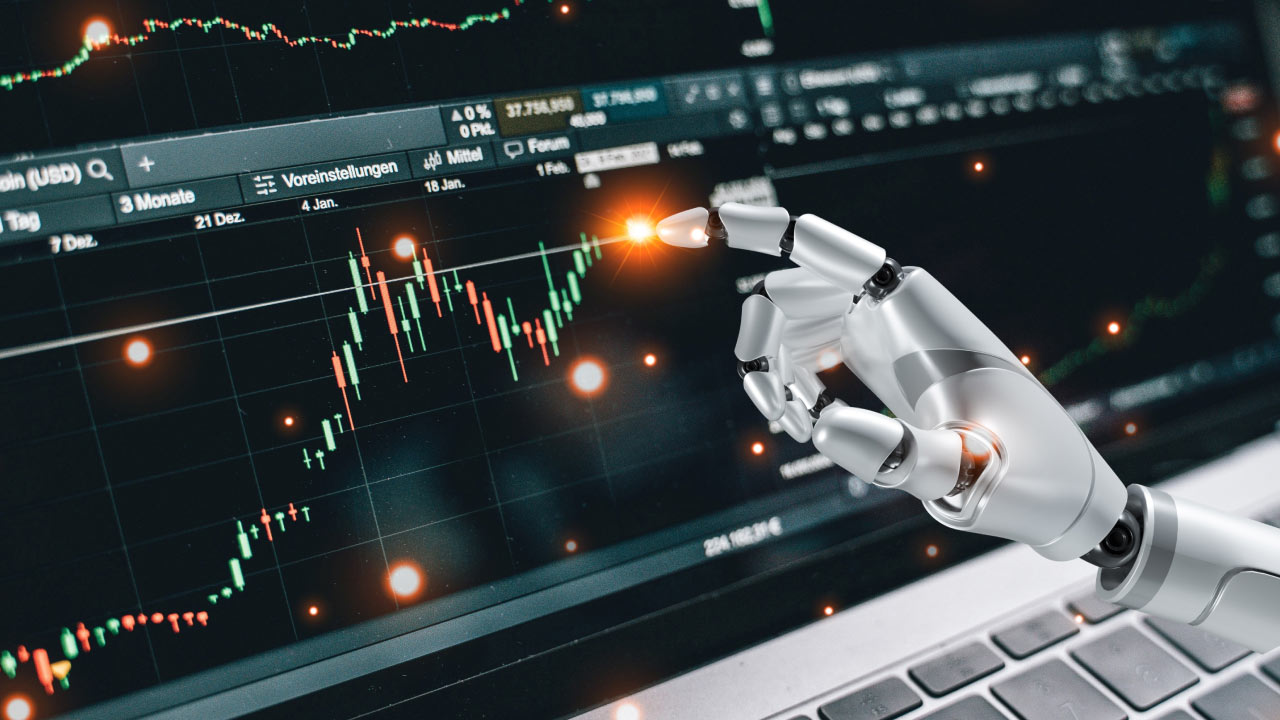
Benefits and Risks of Using AI in Trading: A robotic hand interacting with a forex trading chart on a computer screen, symbolizing AI-driven trading strategies.

Starting your trading journey can feel overwhelming, especially with the complexities of the futures market. Two concepts that every beginner should understand early on what is paper trading and gold futures trading. Paper trading allows you to practice trading strategies without risking real money, while gold futures offer a unique opportunity to participate in the commodity markets, particularly in precious metals. This article explains what paper trading is, why it’s important, and how you can effectively trade gold futures to build a profitable trading career.

What Is Paper Trading?

Paper trading, also known as simulated or demo trading, is a method where traders buy and sell assets using virtual money instead of real capital. This practice mimics real market conditions, providing a risk-free environment to learn how trading works. Historically, traders used to literally write down their trades on paper—hence the term—but today, advanced online platforms provide realistic simulations.

Paper trading is essential for beginners because it helps build confidence and understand the mechanics of order placement, trade management, and market timing without financial risk. Experienced traders also use paper trading to test new strategies or get accustomed to unfamiliar markets or instruments.

Benefits of Paper Trading

The advantages of paper trading are numerous. First, it removes the emotional stress that comes with risking real money, allowing traders to focus purely on strategy and analysis. Second, it helps beginners learn how to use trading platforms, including setting stop losses, taking profits, and managing positions. Third, paper trading enables experimentation with different trading styles—whether day trading, swing trading, or longer-term investing—before committing capital.

By practicing with virtual funds, traders can identify mistakes and improve their approach, which significantly increases the chances of long-term success when transitioning to live trading.

What Are Gold Futures?

Gold futures are standardized contracts to buy or sell a specific quantity of gold at a predetermined price on a set future date. These contracts are traded on commodity exchanges such as the COMEX (part of the CME Group). Gold futures provide traders and investors with exposure to gold prices without physically owning the metal.

Gold is widely regarded as a safe-haven asset, often sought during periods of economic uncertainty, inflation, or geopolitical tensions. Trading gold futures allows participants to hedge against risk or speculate on price movements with leverage, offering opportunities for substantial gains, but also carrying significant risk.

How to Trade Gold Futures

Trading gold futures requires understanding the basics of the contract and market dynamics. Here’s a step-by-step guide to help beginners start trading gold futures effectively:

1. Understand Contract Specifications

Each gold futures contract represents 100 troy ounces of gold. The minimum price fluctuation (tick size) is $0.10 per ounce, equivalent to $10 per tick per contract. Knowing these details helps in calculating potential profits or losses.

Contracts have expiration dates—usually monthly—after which they must be settled. Traders need to be aware of contract rollovers to avoid unexpected positions.

2. Choose a Reliable Trading Platform

Selecting a trusted futures trading platform is crucial. The platform should offer real-time quotes, advanced charting tools, and easy order execution. Many brokers provide demo accounts, allowing you to paper trade gold futures before risking real money.

3. Analyze the Market

Use both technical and fundamental analysis to inform your trading decisions. Technical analysis involves studying price charts, indicators, and patterns to predict future price movements. Fundamental analysis considers economic data, geopolitical events, and central bank policies that influence gold prices.

4. Develop a Trading Plan

Before entering trades, create a clear plan defining entry and exit points, stop-loss levels, and position size. Discipline is key; avoid impulsive trades based on emotions.

5. Practice Risk Management

Gold futures trading involves leverage, amplifying both gains and losses. Use stop-loss orders to limit potential losses, and never risk more than a small percentage of your trading capital on a single trade.

6. Start Paper Trading

Begin by simulating trades on a demo account to familiarize yourself with market behavior and test your strategies. Adjust your plan based on what works best in different market conditions.

The Importance of Combining Paper Trading with Gold Futures

Paper trading and  how to trade gold futures complement each other perfectly for beginners. By first practicing on a simulated platform, traders learn to navigate the volatility of gold prices, understand order execution, and refine timing strategies. This approach reduces costly mistakes when moving to live trading.

Gold futures’ inherent volatility provides an excellent training ground for learning how to manage risk and leverage. Paper trading allows beginners to experience this without financial pressure, gradually building the confidence and skills needed for success.

Tips for Successful Gold Futures Trading

  • Stay Updated: Monitor global economic indicators, inflation reports, and geopolitical news affecting gold prices.
     
  • Use Technical Tools: Incorporate indicators like moving averages, RSI, and MACD to identify trends and reversals.
     
  • Maintain Discipline: Stick to your trading plan and avoid emotional decisions.
     
  • Keep Learning: Markets evolve, so continually educate yourself through webinars, books, and market analyses.
     
  • Start Small: When transitioning to live trading, begin with small positions to minimize risk.
     

Conclusion

Paper trading is an invaluable tool that allows you to practice and perfect your trading strategies without risking real money. When combined with a solid understanding of gold futures, it creates a powerful foundation for anyone looking to enter the futures market. By learning contract details, analyzing the market, and developing disciplined risk management, you can trade gold futures effectively and confidently. Begin your trading journey with paper trading and gradually move towards live trading to unlock the full potential of gold futures.

Exploring Prop Firms in Nigeria in 2025 for TradersExploring Prop Firms in Nigeria in 2025 for Traders

Benefits and Risks of Using AI in Trading: A robotic hand interacting with a forex trading chart on a computer screen, symbolizing AI-driven trading strategies.

Introduction to Prop Firms in Nigeria

Prop firms, or proprietary trading firms, have become a significant opportunity for traders looking to enhance their careers and trading skills. In Nigeria, the landscape of prop firms is expanding rapidly in 2025, offering new avenues for both beginner and professional traders. A prop firm provides capital to traders, enabling them to trade financial markets without risking their own money. This model allows traders to access larger positions, develop strategies, and focus on refining their trading techniques.

Understanding How Prop Firms Work

At the core, a prop firm invests in its traders. When a trader joins a prop firm, they are given a funded account to trade with. The profits earned are shared between the trader and the firm, while losses are often absorbed by the firm up to a certain limit. This arrangement is beneficial for traders in Nigeria who may face capital constraints but wish to participate actively in markets such as Forex, stocks, and commodities.

Advantages of Joining a Prop Firm in Nigeria

Joining a prop firm in Nigeria provides several advantages. First, it allows traders to access professional trading platforms and tools that may otherwise be expensive or difficult to obtain. These platforms provide real-time market data, advanced charting tools, and risk management features that are essential for effective trading. Second, prop firms often offer training programs that guide traders through strategy development, risk management techniques, and the psychology of trading. This is especially valuable for Nigerian traders who are looking to improve their skills in a structured environment.

How to Start Trading with a Nigerian Prop Firm

Starting with a prop firm in Nigeria involves several steps. Initially, a trader needs to apply to a firm and may undergo an evaluation or demo trading period. This evaluation tests the trader’s ability to manage risk, execute trades, and adhere to specific trading rules. Once the evaluation is successful, the trader is granted a funded account. It is important for Nigerian traders to carefully read the terms of the prop firm, understand the profit-sharing structure, and know the risk limits set by the firm.

Strategies for Success in Prop Firms

Success in a prop firm requires discipline, strategy, and a clear understanding of market behavior. Traders in Nigeria should focus on developing a trading plan that includes entry and exit strategies, risk management rules, and clear profit targets. Consistency is key, as prop firms look for traders who can generate steady returns rather than occasional large profits. Another essential aspect is managing emotions, as trading with a funded account can sometimes lead to overconfidence or fear-based decisions.

Role of Technology in Nigerian Prop Firms

In 2025, technology plays a vital role in prop trading. Many Nigerian prop firms use platforms like MT5, MT4, and other advanced trading software that offer analytical tools, automated trading options, and real-time alerts. These tools help traders make informed decisions and implement strategies efficiently. Additionally, online communication and educational resources provided by prop firms make it easier for traders in different regions of Nigeria to access mentorship and guidance.

Risk Management and Discipline

Risk management is a cornerstone of successful trading in prop firms. Nigerian traders must learn to set stop-loss orders, manage position sizes, and avoid over-leveraging their accounts. A disciplined approach ensures that losses are contained, and profits can accumulate over time. Prop firms emphasize risk management because it protects both the firm’s capital and the trader’s opportunity to continue trading.

The Future of Prop Trading in Nigeria

Prop trading in Nigeria is poised for growth in 2025. With increased access to technology, educational resources, and international market exposure, more Nigerian traders are likely to explore prop firms as a career path. The model provides a professional environment where traders can develop skills, learn market dynamics, and achieve financial growth without the burden of using personal capital.

Conclusion

Exploring prop firms in Nigeria in 2025 presents a promising opportunity for traders at all levels. By joining a prop firm, Nigerian traders gain access to professional tools, capital, training, and risk management strategies that enhance their trading experience. Success requires discipline, strategic planning, and the ability to manage emotions while trading. As the prop firm industry in Nigeria continues to expand, it opens doors for aspiring traders to build a sustainable and professional trading career.