
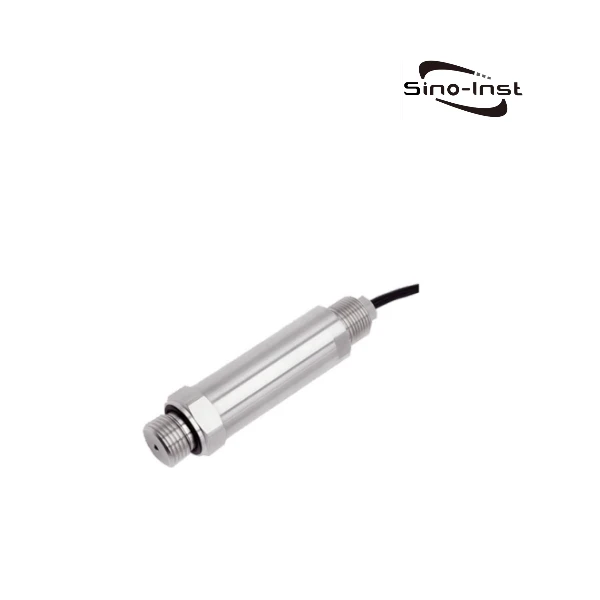
Fundamental Operating Principles
At their core, pressure transducers function by converting mechanical force into electrical signals through various sensing technologies. When pressure acts upon the sensing element (typically a diaphragm), it creates minute deformations that are translated into measurable electrical changes. Common output signals include 4-20 mA current loops (ideal for long-distance transmission with minimal signal degradation) and voltage outputs (0-5V or 0-10V) suited for local monitoring applications.
The choice between a standard pressure sensor and a high pressure transducer depends on application requirements, with specialized high-pressure models capable of measuring up to 72,000 psi in extreme industrial environments. These robust instruments incorporate reinforced diaphragms and specialized materials to withstand intense operating conditions.
Pressure transducers are classified by their reference pressure type: absolute pressure sensors measure against a perfect vacuum, essential for altitude or barometric applications. Gauge pressure models reference atmospheric pressure, commonly used in industrial processes. Differential pressure transducers compare two system points, critical for flow measurement and filter monitoring.
Vacuum pressure transducers measure pressures below atmospheric, important in semiconductor manufacturing and scientific applications. The explosion-proof models add another layer of safety for hazardous environments where flammable gases may be present.
HVAC systems rely on pressure transducers for airflow control and filter monitoring. In hydraulics, they ensure proper system pressure for heavy machinery operation. The food and pharmaceutical industries use sanitary-rated transducers to maintain process hygiene while monitoring critical parameters.
Semiconductor fabrication demands ultra-clean, high-precision sensors for vacuum process control. Off-road vehicles employ ruggedized transducers that withstand vibration and temperature extremes. Every application presents unique requirements that influence transducer selection.
Accuracy Considerations
Transducer accuracy specifications range from ±0.02% to ±2.00% of span, with the appropriate level determined by application criticality. Environmental factors like temperature fluctuations affect performance, making temperature-compensated models essential for many industrial uses. The total error budget includes nonlinearity, hysteresis, repeatability, and thermal effects – all specified in comprehensive manufacturer accuracy statements.
| Application | Typical Accuracy Requirement | Recommended Technology |
|---|---|---|
| Pharmaceutical Processing | ±0.1% or better | CVD Thin Film |
| HVAC Systems | ±0.5% | Si-Glass MEMS |
| Hydraulic Systems | ±0.25% | Strain Gauge |
| Oil & Gas (Wellhead) | ±0.1% | High Pressure Transducer |
Advanced Sensing Technologies
Chemical Vapor Deposition (CVD) thin film technology represents the gold standard for precision pressure measurement in industrial applications. This advanced method deposits an extremely stable resistive layer directly onto the sensing diaphragm, creating highly accurate and repeatable strain gauges unaffected by temperature cycling or mechanical fatigue.
Silicon capacitive MEMS (Micro-Electro-Mechanical Systems) technology, exemplified by Si-Glas™ designs, offers exceptional performance for low-pressure applications. These miniature sensors achieve remarkable stability and precision for applications like cleanroom pressure monitoring and medical ventilation systems.
For the most demanding industrial environments, specialized explosion-proof pressure sensors combine robust construction with intrinsic safety barriers to prevent ignition in hazardous areas.
Choosing the appropriate pressure transducer requires evaluating multiple factors: pressure range (from inches of water column to thousands of psi), media compatibility (considering corrosion potential), temperature extremes, vibration exposure, and required electrical outputs. Environmental sealing (IP ratings) becomes crucial for outdoor or washdown applications.
Proper mounting orientation (typically with the pressure port facing downward to prevent media accumulation), use of isolation valves for maintenance, and appropriate tubing/piping to minimize pulsation effects all contribute to optimal transducer performance. Electrical considerations include proper shielding for noise reduction and correct power supply matching.
Companies like Ashcroft and Sino-Inst continue advancing pressure measurement technology to meet evolving industrial demands. Sino-Inst offers specialized solutions including high pressure transducer options for extreme applications, contributing to safer and more efficient industrial processes worldwide.